June 11, 2026
Why most hotel social strategies still don't drive booking
Published by HoSS — Hospitality Social Media Summit




Every year, hospitality teams ship an enormous volume of social content. And every year, the same exchange plays out in revenue meetings. Social is doing fine: the feed looks good, engagement is up, last month's reel beat expectations.
Then someone asks whether any of it actually moved occupancy, and the room goes a little quiet. The answer drifts towards brand awareness and long-term visibility, which is another way of saying nobody can point to a booking.
This usually isn't a content problem. The work is often good. It's a structural problem, and it starts before anyone opens a camera or writes a caption. Most hotel social strategies are built around content instead of outcomes. The team ends up optimising for output — posts, reach, the numbers that fill a monthly report — rather than for the commercial result the business actually needs. A polished feed and a strategy designed to drive bookings are not the same thing. Treating them as if they are is the reason social stays so hard to defend when budgets get discussed.
Step 1. Start with a number, not a content theme
The first question a social strategy should answer has nothing to do with content. It's about what the business needs to achieve, put in terms specific enough to measure and honest enough to hold someone to.
"Increase bookings" is a direction, not a goal. That distinction does real work. A direction can only ever be travelled in; it has no finish line. A goal has an endpoint you either reach or miss.
COMPARE THESE:
Increase direct bookings.
GoalGrow direct booking revenue by 15% over the next twelve months.
Drive more F&B revenue.
GoalIncrease restaurant covers from local diners by 10% year on year.
Grow the wedding business.
GoalGenerate 40 qualified wedding enquiries
before Q3.
The number and the timeframe aren't decorative. They're what makes the goal usable. Without them, there's no way to look at the strategy in month four and say whether it's working or simply producing content on schedule. Anchor social to a specific commercial goal and suddenly every decision has a filter: does this move us towards the number? A content idea either earns its place or it doesn't, and the team starts to tell the difference. Most hotel social teams can't do that today, for a simple reason. Nobody ever gave them a target precise enough to measure against.
Step 2. Translate the goal into guest behaviour
Once the goal is set, the next move is the one most teams skip. Skipping it is precisely why so much content ends up sitting at a comfortable distance from anything commercial.
Before a single content decision gets made, the strategy has to answer a behavioural question: what does a guest actually need to do, and in what order, for this goal to happen?
Take direct bookings. Growing them means moving a guest through a sequence:
Each of those is a distinct moment in how a guest decides, and social influences some of them far more powerfully than others. Awareness lands early, before travel is even on the table. Preference and trust build slowly, through repeated exposure to content that makes a property feel knowable — not impressive from a distance, but familiar in a way that takes the edge off booking somewhere new. And the choice to go direct rather than through Booking.com often comes down to one piece of information the guest happened to absorb early enough to act on.
Map this sequence explicitly and the rest gets easier. You can give each stage a job, pick content that does that job, and judge whether it's working in terms that connect back to the original goal. That's the line between a social strategy and a social calendar. One is built around what guests need at each stage of a decision. The other is built around what the team has time to produce this week.
Step 3. Choose formats that match the behaviour
Understanding the sequence is half the job. The other half is choosing formats actually capable of doing the work at each stage, rather than formats picked because they're trending or because they scored well on a metric that has nothing to do with bookings.
For direct bookings specifically, a handful of formats tend to earn their keep in hospitality.
Room and experience walkthroughs.
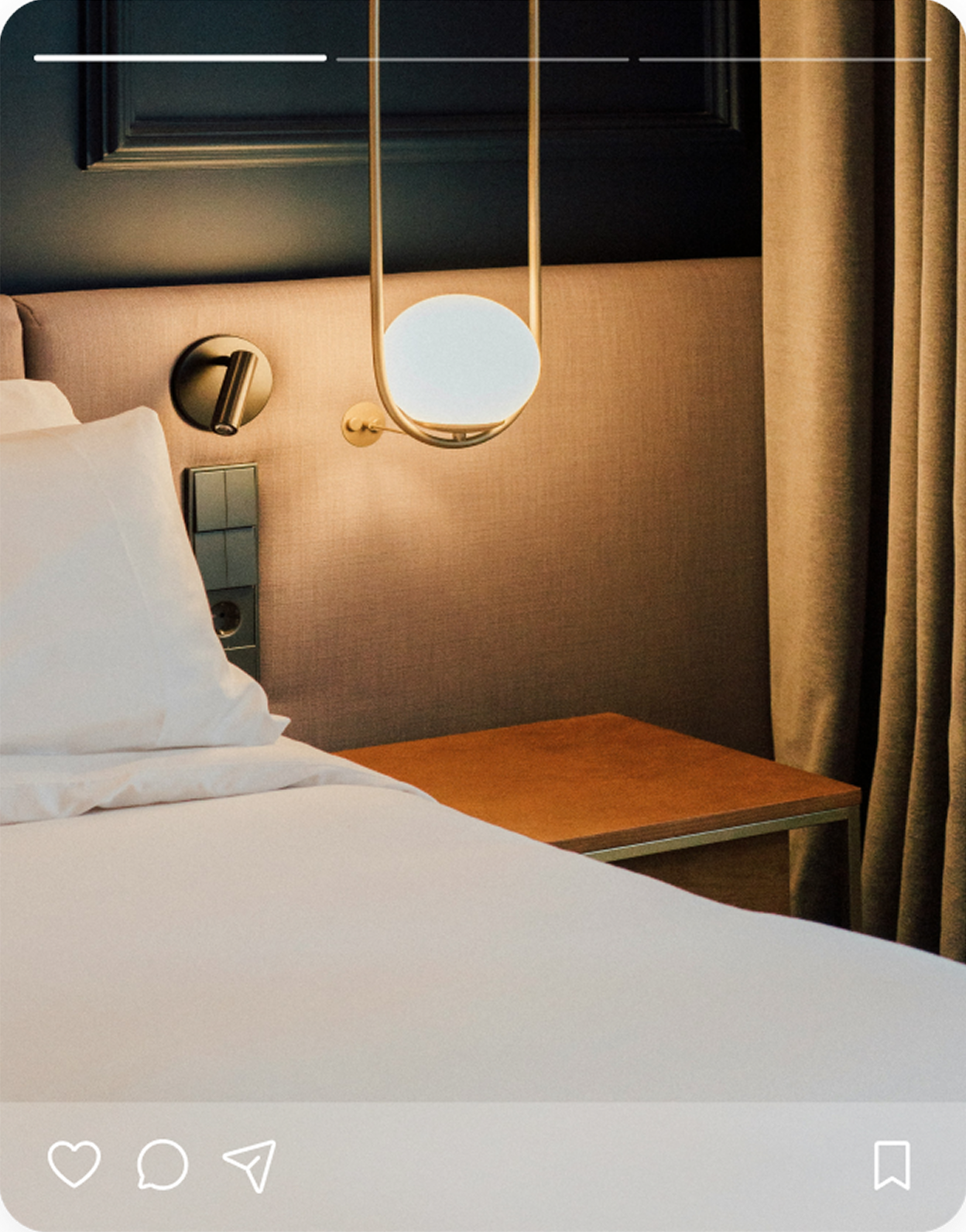
Booking a room at a real price point is driven largely by familiarity and a kind of emotional certainty. Short, human-scale video showing what a room or an experience genuinely looks like, without the gloss of a brand film, takes away some of the uncertainty that stops people committing. A guest who can already picture themselves in the space is far likelier to complete the booking than one working from flattering photography and hopeful copy.
Guest content,
redistributed on purpose.
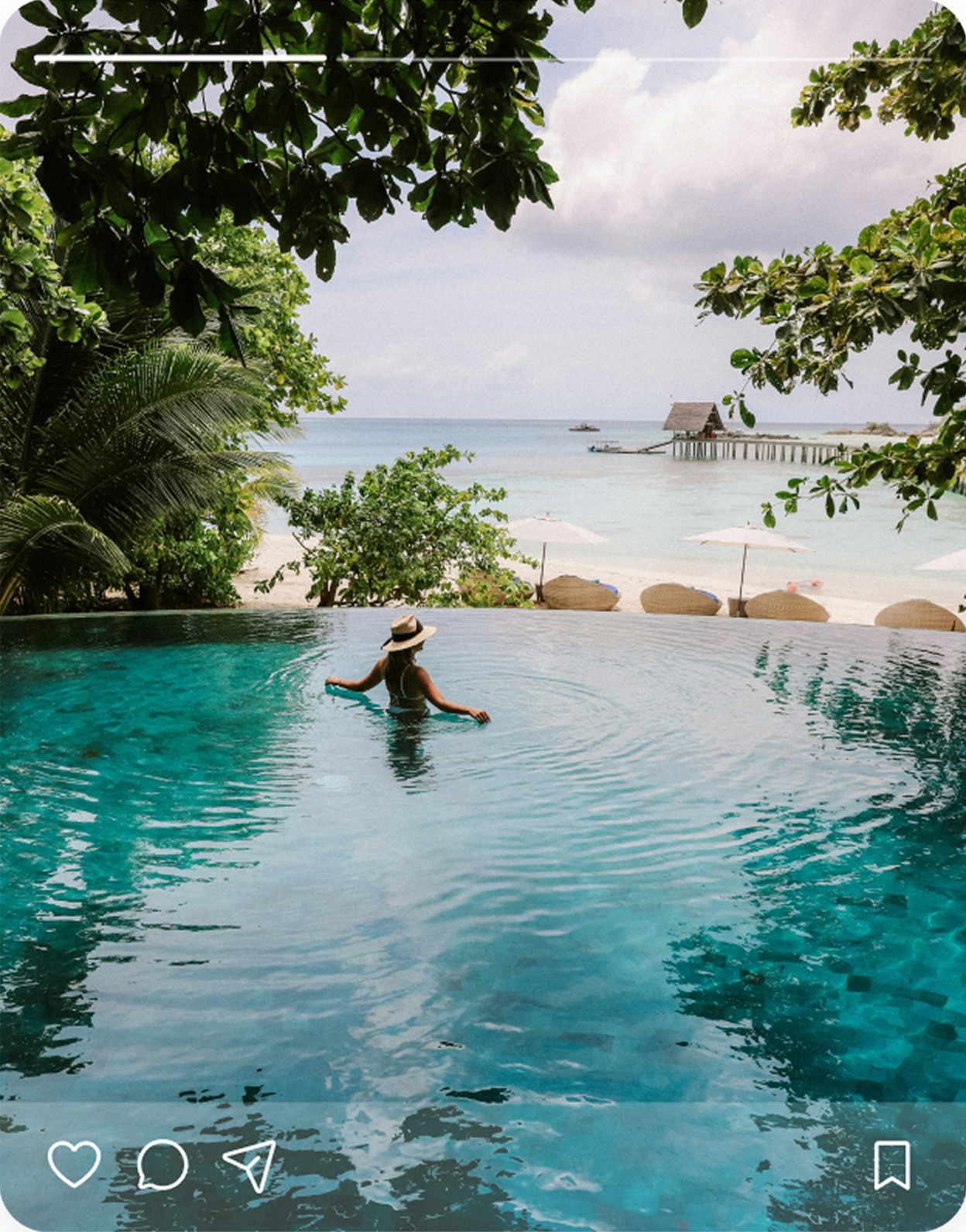
A real guest documenting a real stay carries a trust signal that branded content rarely matches, however well produced the brand work is. That weight counts most at the consideration stage, when someone is comparing options. Hotels that put a genuine system around encouraging, collecting and reusing guest content with permission tend to get more out of it than those leaning on brand-produced assets alone.
Direct-book content, made early.
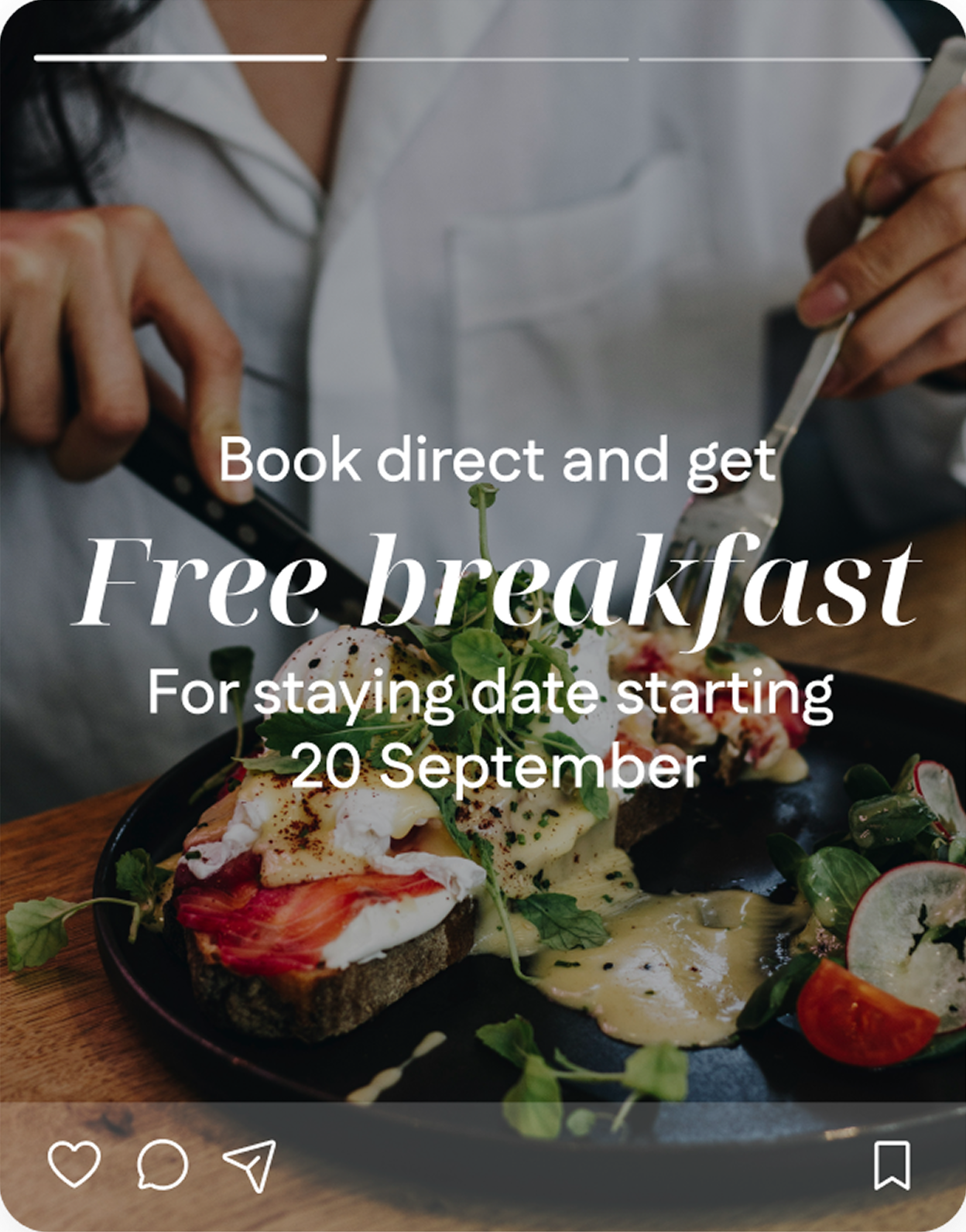
Most hotels offer something real for booking direct: a better rate, upgrade priority, flexible cancellation, early check-in. And most of them only mention it at the booking stage, once the guest has already decided where they're staying and is just picking a channel. Social is the chance to make that case much earlier, while preference is still forming, so the argument for going direct is already won by the time the guest reaches the decision.
Retargeting built around hesitation.
Guests who reached the booking page and left without finishing aren't lost. They're undecided, and whatever stopped them is usually specific and fixable: price, cancellation terms, uncertainty about what's included. Speaking to that audience with content that addresses the friction head-on is, in most hotel media plans, one of the more efficient things paid social can do. It's also one of the most consistently underused.
Occasion content with an actual next step.
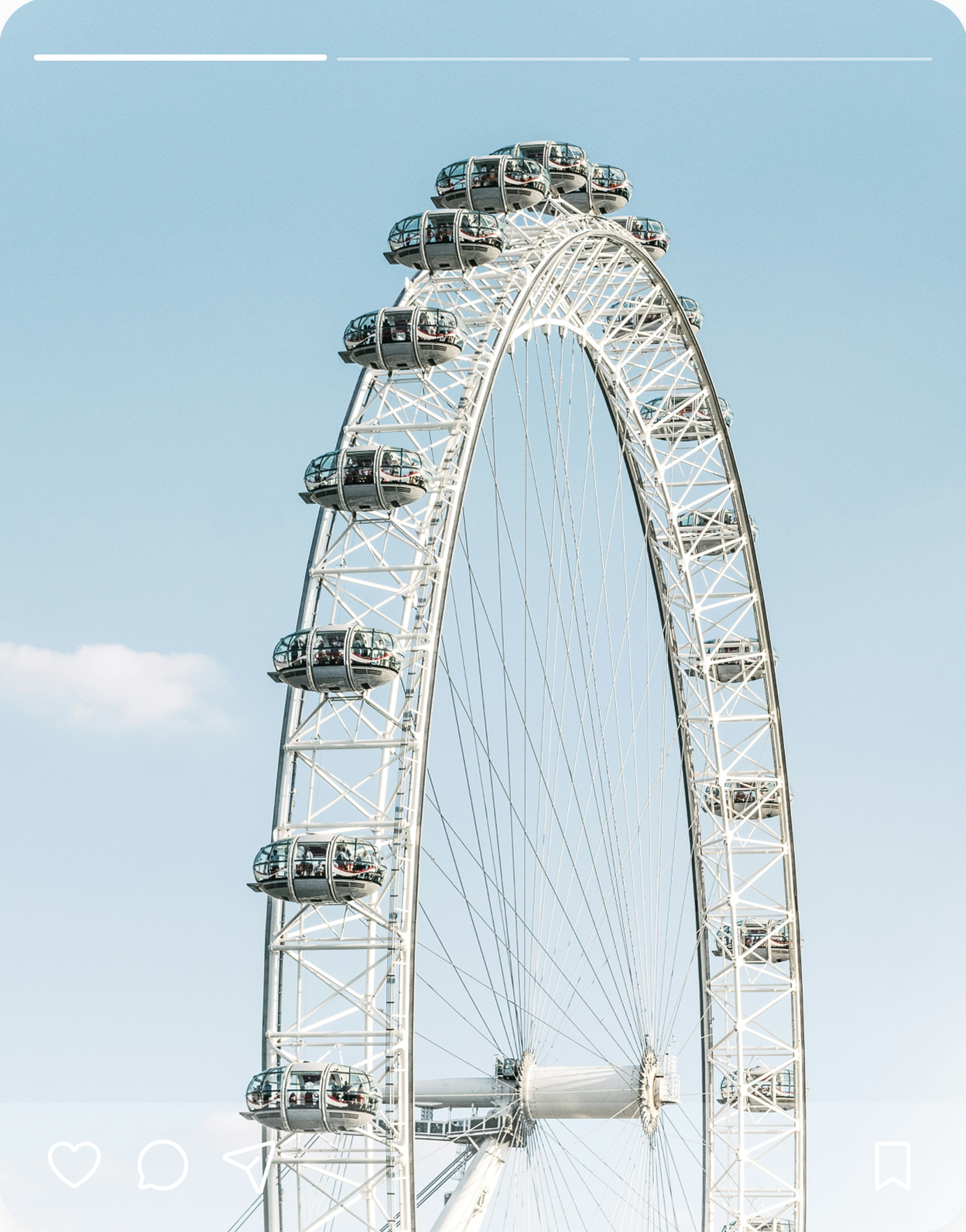
The gap between a seasonal post that gets saved and one that gets booked is rarely creative. It's structural: a clear prompt, a link, a specific offer with a deadline. Any piece of content meant to contribute to a booking should make the path from interest to action short and obvious.
What doesn't work, and why it's so hard to stop
The formats that reliably fail to drive bookings aren't hard to name. They're hard to give up, because they tend to perform well on exactly the metrics that show up in the monthly report. Reach, saves, shares, engagement rate. All of it creates the impression of a working strategy even when nothing is converting.
Inspiration content with no intention behind it collects saves and a bit of goodwill, but rarely produces a booking without a clearer next step. It has a role in keeping a property in the ambient background. That role just isn't driving reservations.
Inspiration content with no intention behind it collects saves and a bit of goodwill, but rarely produces a booking without a clearer next step. It has a role in keeping a property in the ambient background. That role just isn't driving reservations.
Feature-led content is another quiet drain. "Our spa has six treatment rooms and a thermal pool" is a fact. What a guest weighing a booking actually wants is a sense of what being there feels like. Moving from listing attributes to conveying experience is one of the most consistent differences between hotel content that converts and content that just accumulates impressions.
And content with no next step ends the conversation at the exact moment the guest is most interested. The form the prompt takes matters far less than the discipline of including one at all.


Putting it together
A hotel social strategy that genuinely contributes to bookings is built around a sequence, not a calendar:
For direct bookings, it runs like this. The goal is to grow direct revenue by 15% in twelve months. The behaviour required is guests choosing the hotel's own site over an OTA. Social influences that by building familiarity ahead of the comparison stage, making the direct-book case early, and re-engaging guests who showed intent but didn't finish. The formats that do this best are walkthroughs, guest content, direct-book posts and hesitation-focused retargeting.
Every piece of content and every campaign either sits inside that logic or it doesn't belong in the strategy. The teams whose social actually contributes to revenue usually aren't producing more than anyone else. They're producing content with a clearer reason to exist, measured against something the business genuinely cares about. That's the difference between a social system and a social presence, and it's the gap most hotel strategies are still sitting in.
The Hospitality Social Media Summit takes place September 3–4, 2026 in London
Places are limited to ensure every attendee receives personalised strategy attention.
Join us in London or online
Stay up-to-date
with Hospitality Social Media Summit
Get updates on city announcements, agenda drops, speaker reveals, and ticket releases.